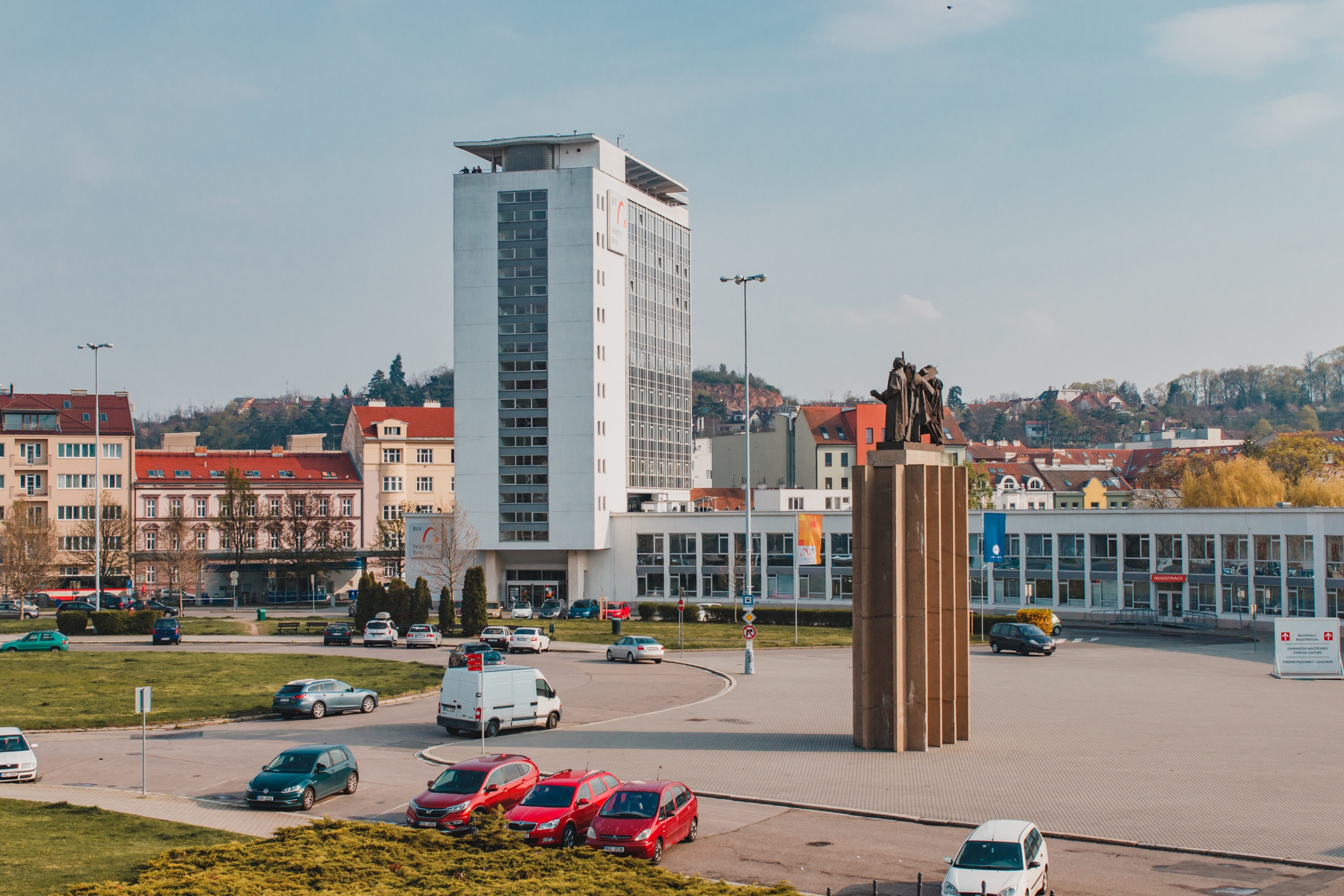
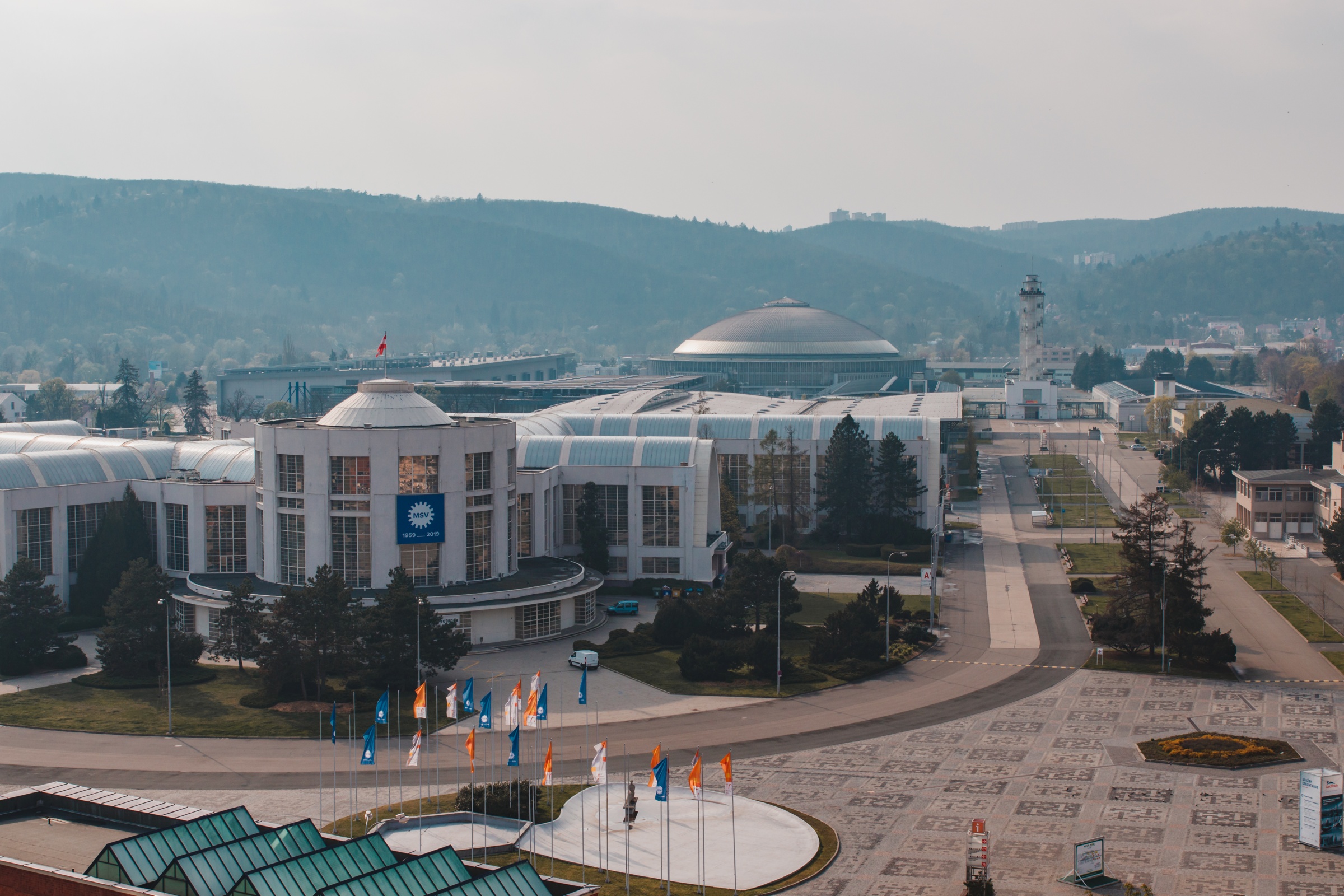
A unique architectural complex with a history dating back to 1928. The site is associated with many significant figures and events. The administrative building designed by Miroslav Spurný and Antonín Ševčík was built on the site of former garages as a continuation of Králík’s arc-shaped entrance structure, developed during the post-war construction wave of the Brno Exhibition Centre (BVV).
From 1956, the development of the city of Brno followed a master urban plan, updated in 1965. In both plans, the exhibition grounds played an important role, anticipating major transformations both within the fairgrounds and in its surroundings. New pavilions, together with the new administrative building, continued the original 1928 structures. Urbanistically, they reshaped the site and, through their generous volumes, established a new spatial scale. This included a new administrative and management building in the Brussels style (1959–1961), which completed the entrance area of the exhibition grounds. Previously existing functions—now replaced—included a foreign visitors’ centre with branches of airlines and Čedok, a bank, a currency exchange, and other services in the curved wing. The use of the high-rise building for representative and administrative purposes has been preserved to this day. Together with Pavilion Z, the tower became a new dominant feature of the area, despite the original design intention of a fifteen-storey building not being realised.
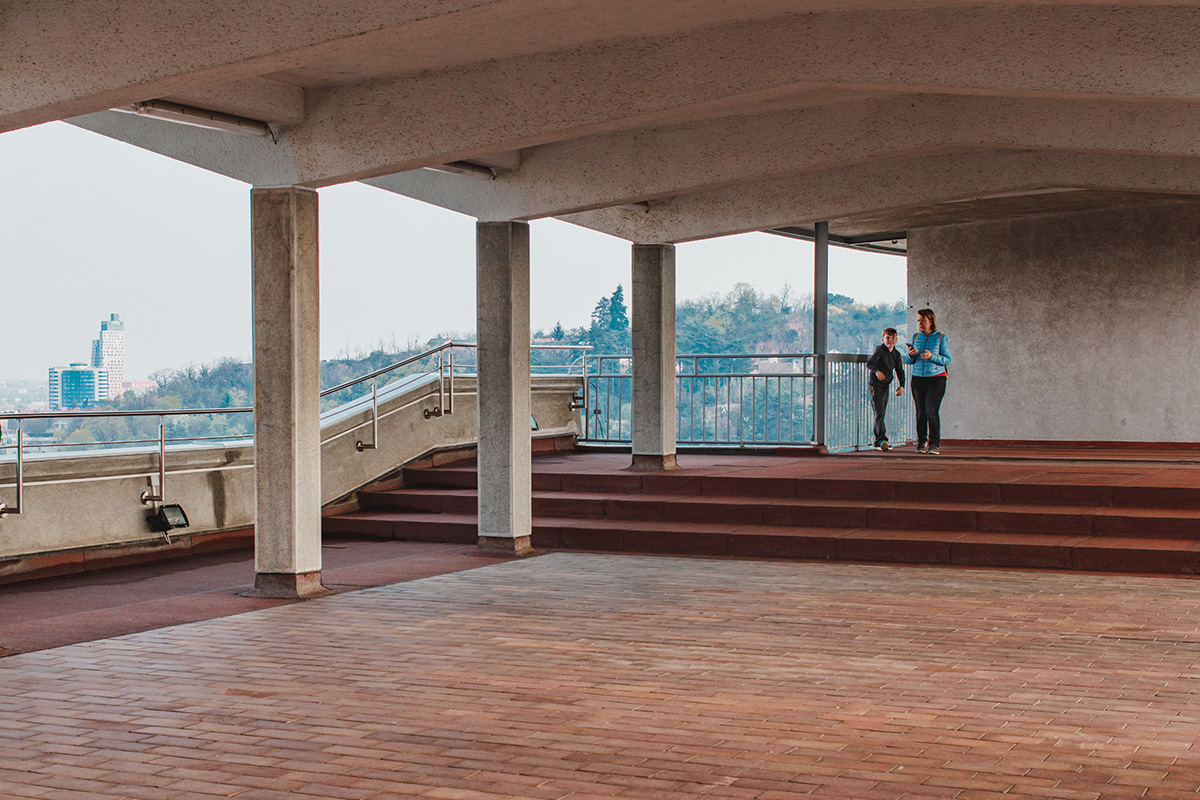
The building is a ten-storey tower with a covered roof terrace. The ground floor contains a hall with a gallery and a suspended staircase; the first to third floors house halls; and the fourth to tenth floors contain office space in a three-wing layout. The low-rise wing connects to the original entrance building of the exhibition centre, forming a continuous curved edge of the entrance space, dominated by the high-rise structure. The structure is a reinforced concrete frame. The low-rise building is founded on strip foundations with a 6 × 6 m structural grid. The tower is founded on a reinforced concrete slab, with frame spans of 7.5 × 6 m up to the second floor and 7.5 × 3 m above. From the second floor upwards, cantilevers of 2.5 m are used on the shorter sides of the building.
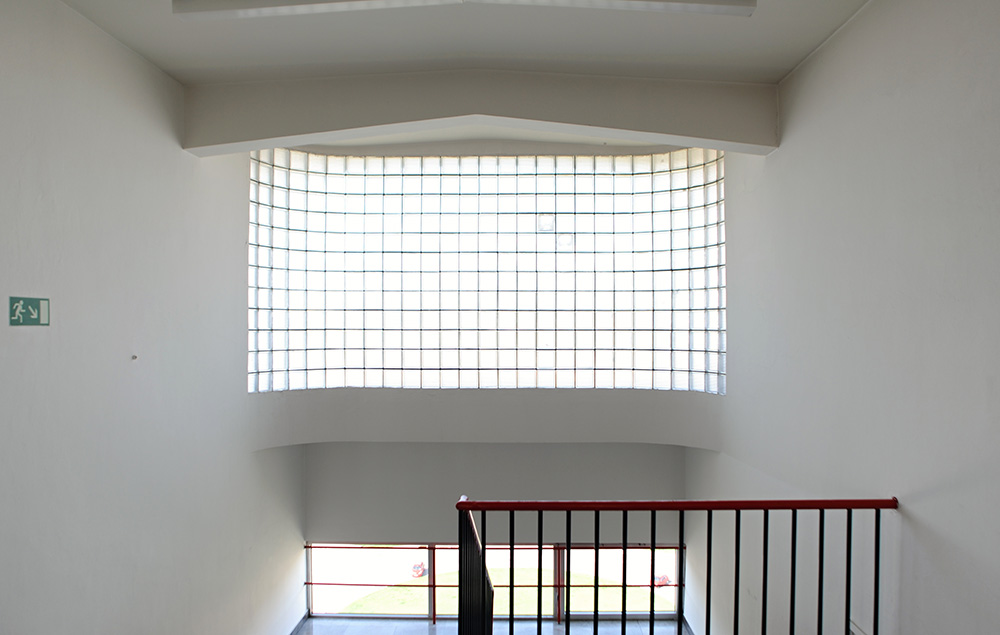
The original façade was designed as a suspended curtain wall with steel double windows, parapets glazed with figured glass, and thermal insulation made of foam glass boards. Office partitions were prefabricated and movable. Heating throughout the building was provided by a Crittall-type radiant ceiling system. Floor finishes vary according to function: the entrance hall features paving made of three types of stone, the curved ground-floor section uses four-colour terrazzo, staircases are clad in marble slabs, and the former cinema and conference spaces feature wooden block flooring.
Between 1993 and 1994, the building underwent reconstruction according to a 1992 design by M. Spurný. A new fire escape staircase was added to the southern façade, and the original steel structure of the glazed façade was replaced with aluminium, significantly altering the building’s overall appearance by removing its original horizontal emphasis. Entrance doors and lifts were replaced, the heating system was modified, and numerous interior alterations were carried out. The administrative building No. 405, together with its plot No. 54, is a protected cultural heritage site.