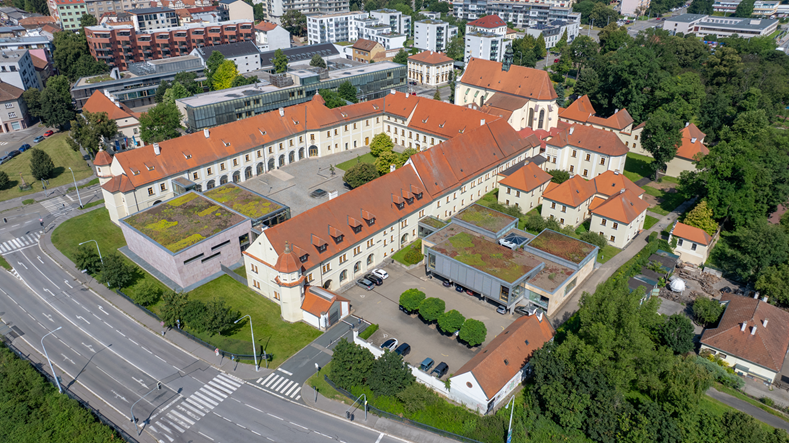
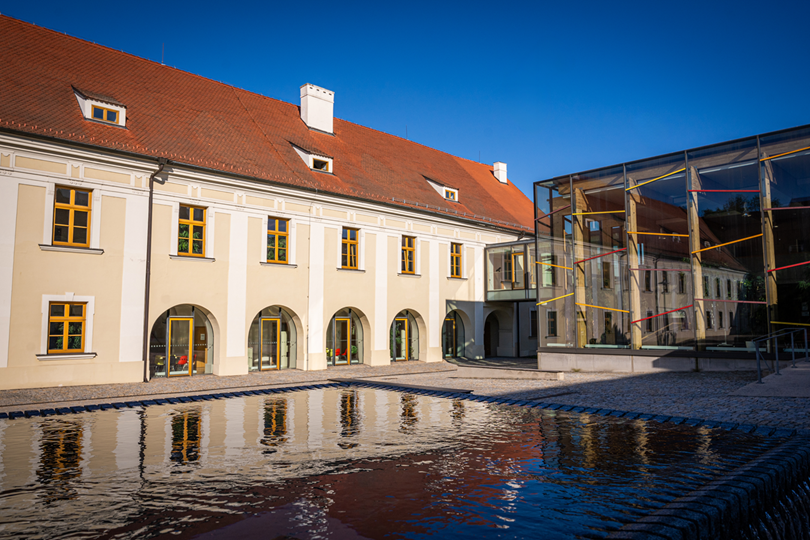
The former Carthusian monastery complex in Brno’s Královo Pole district was founded in 1375, when the Margrave of Moravia, John Henry of Luxembourg, younger brother of Emperor Charles IV, issued the founding charter for the monastery Cella Trinitatis. The nearby Church of the Holy Trinity also became part of the complex. The monastery was established for a prior and twelve monks of the Carthusian order, whose life was characterised by strict solitude and contemplation. This was reflected in the spatial organisation of the site – individual monastic cells had their own small gardens and were designed to minimise contact between the monks. The monastery was completed relatively quickly; by 1387 sources already refer to it as a finished work.
Over the centuries, the complex was repeatedly affected by military conflicts – during the Hussite Wars, the wars with the Hungarian king Matthias Corvinus, and the Thirty Years’ War, when in 1645 it briefly served as the headquarters of the Swedish army during the siege of Brno. In the 18th century, the complex underwent Baroque modifications, but in 1782 it was abolished as part of Emperor Joseph II’s reforms and converted into barracks. Paradoxically, this military use helped preserve the historic fabric of the site, which today represents a unique example of Carthusian monastic architecture in the Czech lands.
After the Second World War, the complex fell into decline and in 1964 it was transferred by the Czechoslovak People’s Army to the Brno University of Technology. This was followed by building adaptations and associated archaeological and historical research, in which, among others, Prof. Jan Bukovský from the Faculty of Civil Engineering at BUT participated. The site was given new life only with the reconstruction launched at the beginning of the 21st century, designed by architects Aleš Burian, Gustav Křivinka, and Vladislav Vrána.
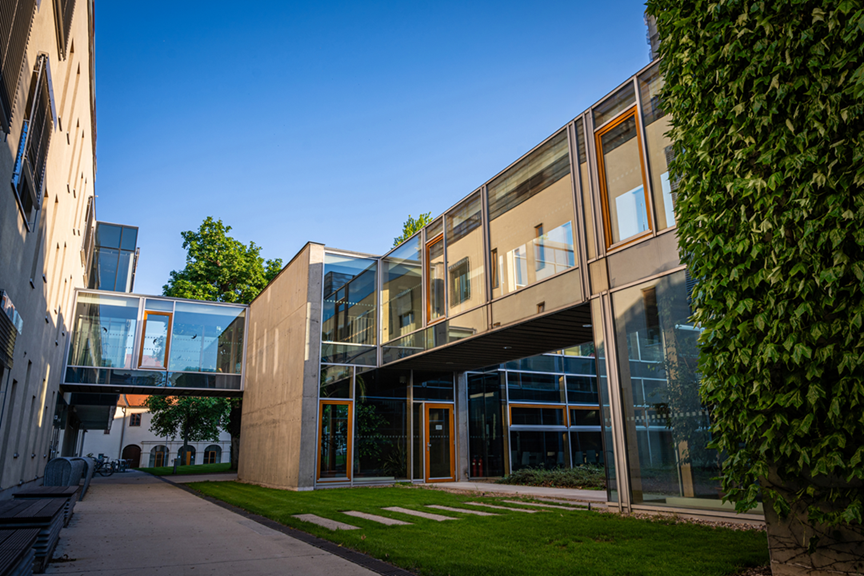
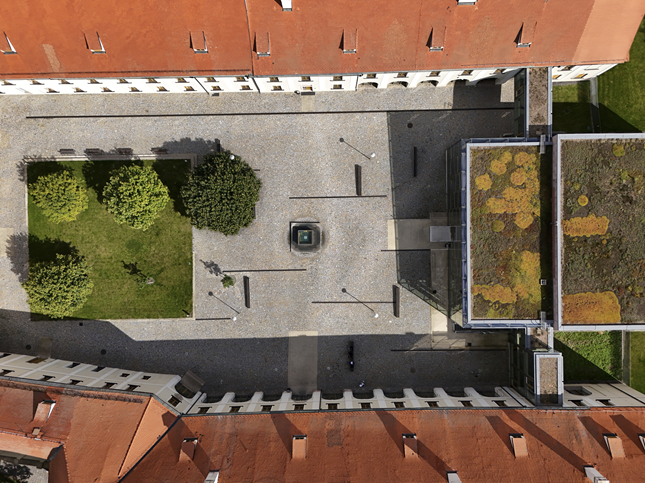
Today, the complex serves as the Faculty of Information Technology. It combines both historic and newly built structures in its operation. Academic departments, seminar rooms, and teaching spaces are located in both parts of the complex. The dean’s office, library, and new lecture halls are situated in the historic buildings, while the new extension houses computer laboratories and underground parking facilities. The historic and contemporary parts of the complex are connected by an elevated walkway at first-floor level.
The reconstruction carried out between 2004 and 2007 received the Building of the South Moravian Region award in 2009, and due to its architectural approach it is regarded as an exemplary case of successful adaptation of historic structures into modern public buildings.