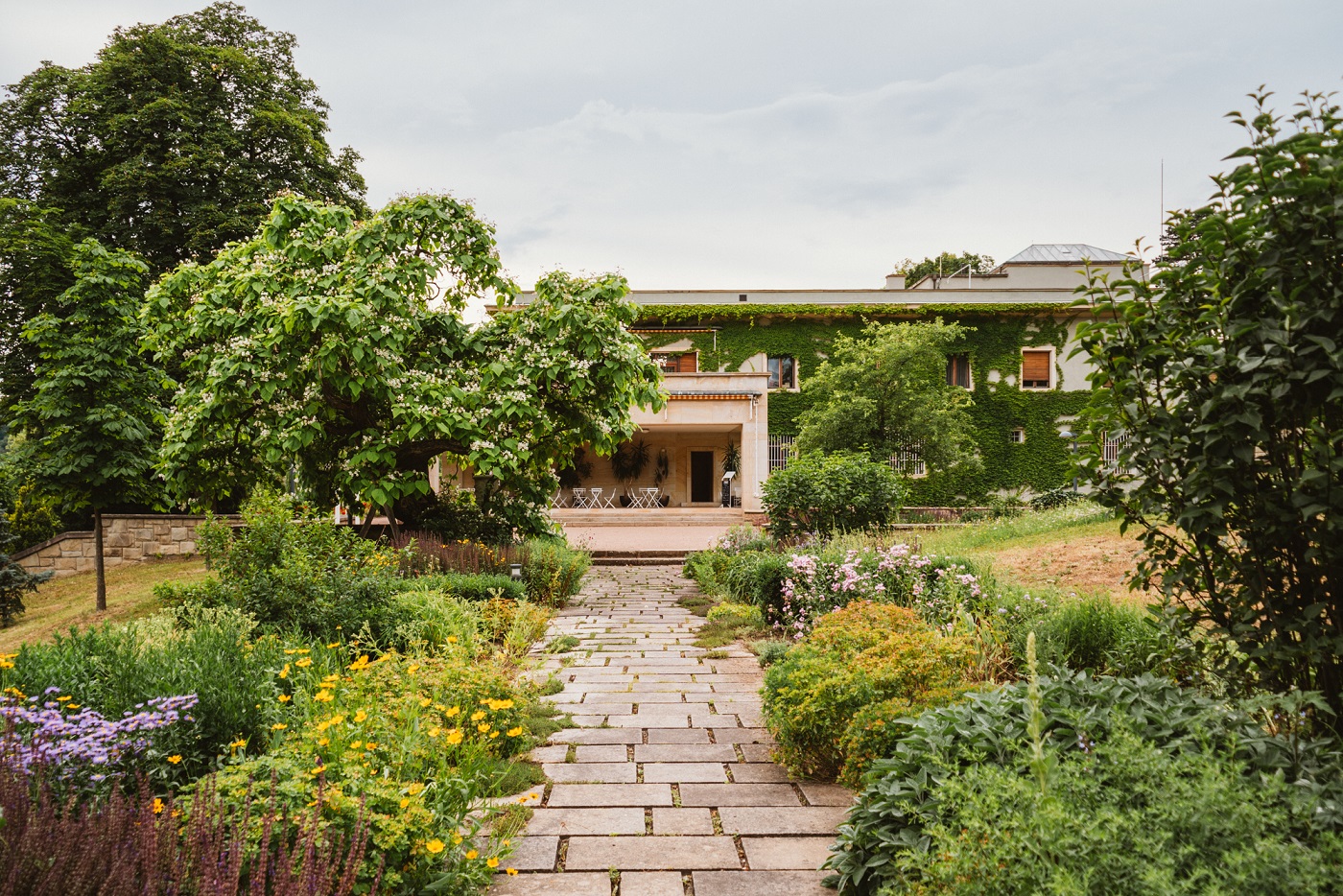
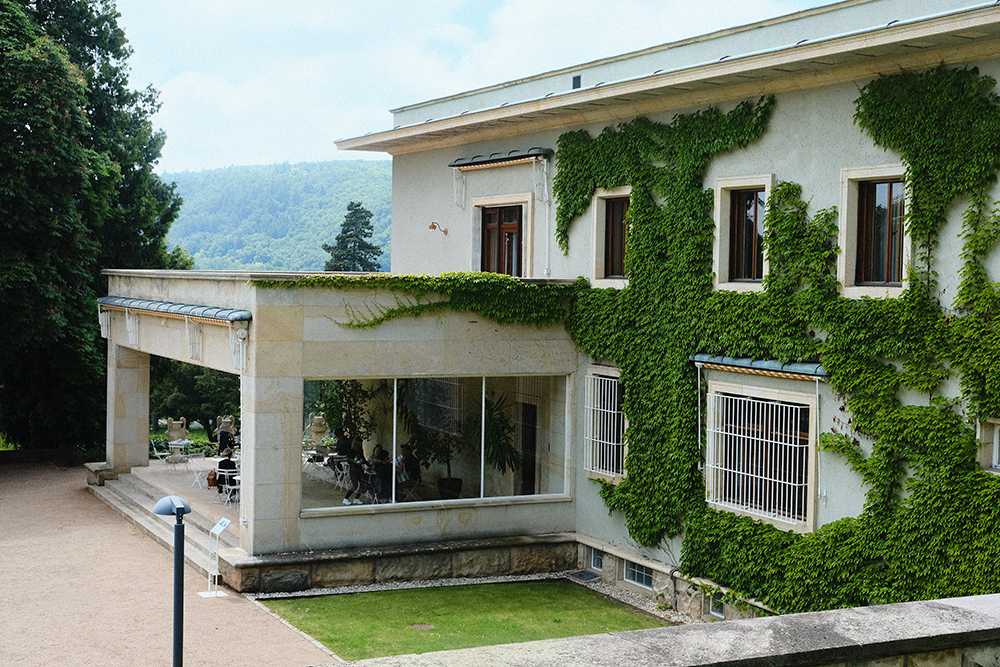
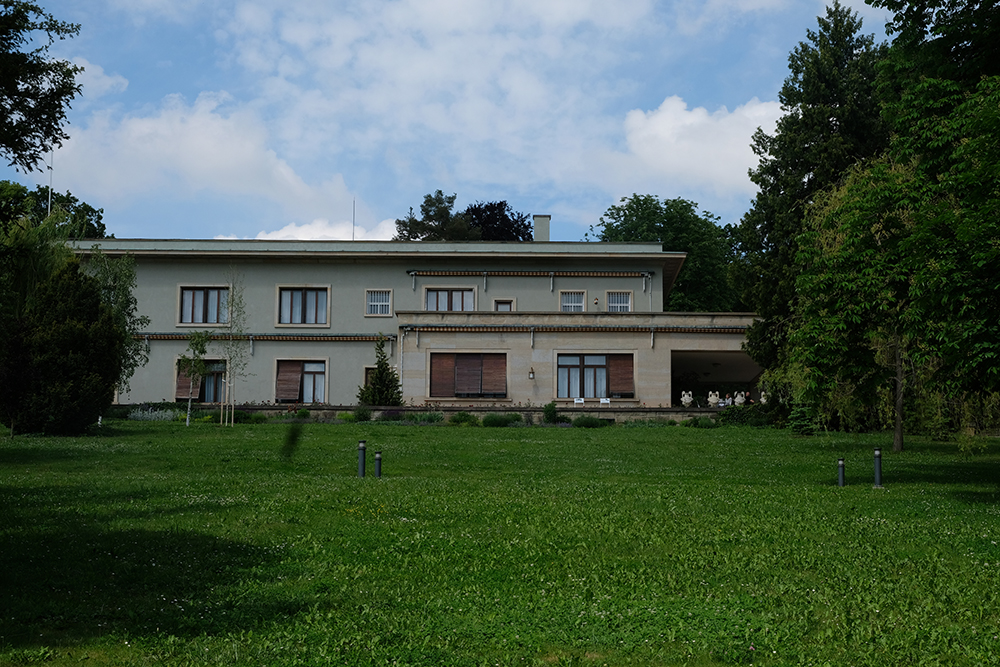
The house designed by architect Ernst Wiesner for the family of the Jewish textile industrialist Alfred Stiassni represents one of the most important residential buildings of the interwar period.
The villa was commissioned by Brno-based textile entrepreneur Alfred Stiassni, who together with his wife Hermine approached one of Brno’s leading interwar architects, Ernst Wiesner. The building was constructed between 1927 and 1929. However, just nine years after moving in, the Jewish family was forced to flee due to the rise of Nazism.
After the Second World War, the villa’s fate changed dramatically. It began to serve as a luxury guesthouse for important state visits, the first being President Edvard Beneš, who stayed here in May 1945. He was followed by a number of other prominent guests. In 1952, the villa and its extensive grounds were taken over by the Regional National Committee, which used it for representative purposes and accommodation of state guests until the 1990s. After 1989, the villa was operated by Fair Travel Brno, which used it for business meetings and rented it for various social events.
During the normalisation period, the interior was modified according to designs by architects Kamil Fuchs and Adéla Jeřábková. These interventions included the addition of luxurious marble bathrooms to individual rooms and the furnishing of representative spaces with heavy, contemporary furniture.
While the exterior of the villa fully reflects Wiesner’s purist architectural style, the interior was deliberately designed as a place of first-republic luxury, featuring representative salons with rich wood panelling, marble fireplaces, stucco decorations, and historicist furnishings. The villa is also fully basemented. A large terrace and loggia open towards a more than three-hectare garden surrounding the house on all sides, providing both privacy and space for leisure activities. The garden still includes a functioning tennis court and swimming pool.
A key architectural and technical feature is the light well, which runs around part of the building. This ingenious solution was used by Wiesner to protect the structure from dampness due to its location on the slope of the Pisárky valley.
Since 2009, the villa has been managed by the National Heritage Institute, which began its full restoration. It was opened to the public at the end of 2014 as a unique example of modernist residential architecture. Since 2018, it has been listed among the prestigious Iconic Houses network of significant 20th-century houses. Today, the villa is open to visitors and also houses the Methodical Centre of Modern Architecture in Brno.
A special tour focusing on the basement spaces, including the Šlapeta Library, was part of the Open House Brno festival, offering insight into both historical and current uses of the villa’s underground areas.