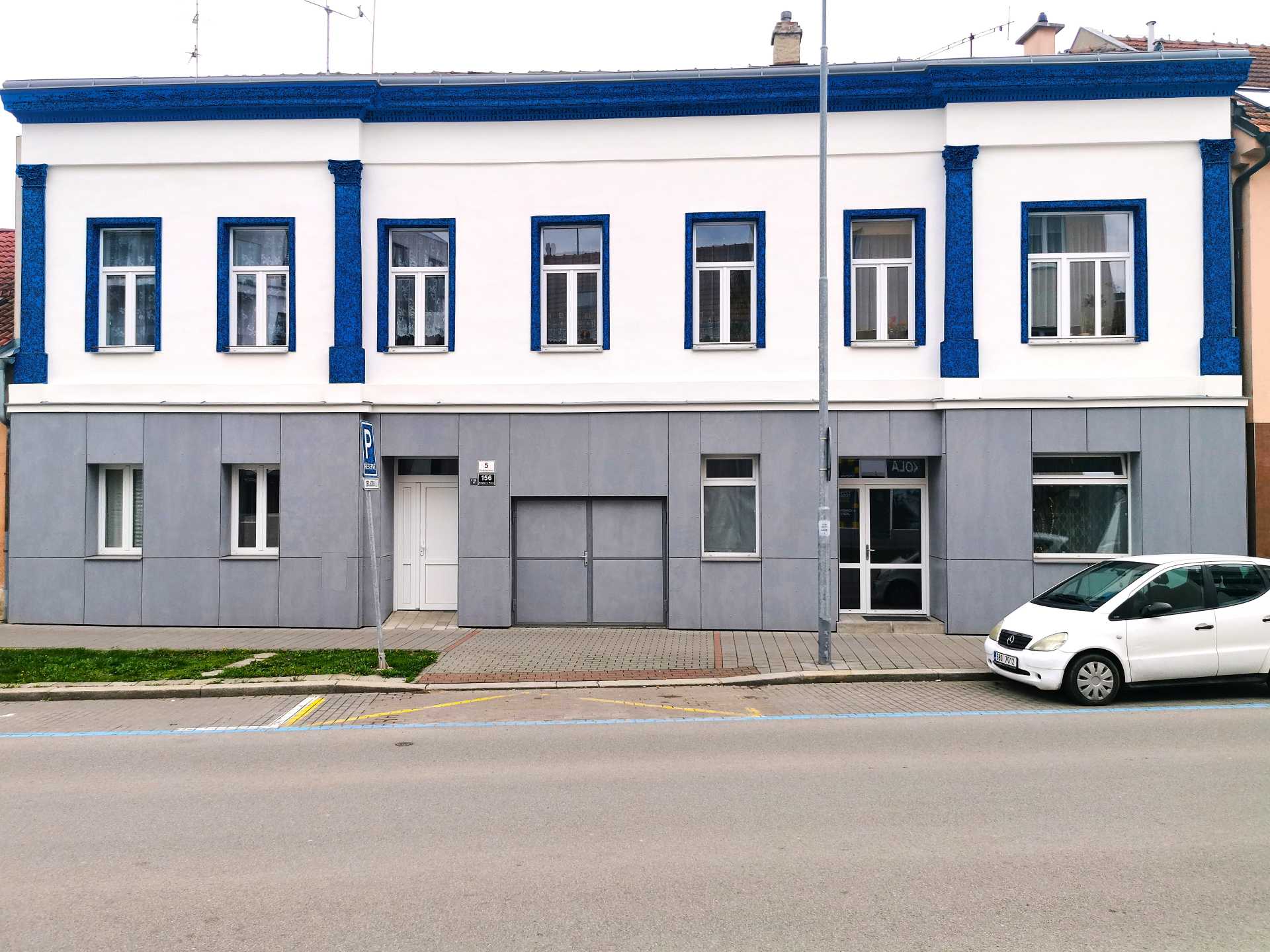
The Orlovna building in Královo Pole is an important part of the historical identity of this former independent municipality, which transformed into a modern and self-confident town at the beginning of the 20th century. Its story is closely connected to the period of rapid development during which Královo Pole was granted town status in 1905 and later became one of the most significant additions to Greater Brno in 1919.
The present-day Orlovna building originally served as a private townhouse where Josef Červinka lived and operated his wholesale grocery business. Červinka was one of the key figures in the modern history of Královo Pole. During his term as mayor, the municipality succeeded in obtaining town status, making him the first mayor of the Town of Královo Pole. He also played a major role in preparing the town’s coat of arms, officially granted in 1908. This important historical milestone is still commemorated every year by the Brno–Královo Pole district during the traditional Coat of Arms Festival. One of the local streets, Červinkova Street, is also named in his honour.
At the turn of the 19th and 20th centuries, Královo Pole experienced extraordinary urban and economic growth. Industrial expansion—especially following the establishment of the Královopolská engineering works in 1890—brought new residents, improved transport links, and the construction of representative streets and buildings. The present-day Palackého třída became the main urban axis, lined with commercial buildings, community institutions, and middle-class housing.
The Orlovna building later developed into an important social and community centre. Its name refers to the Orel movement, a Catholic sports and community organisation that, from the early 20th century onwards, promoted cultural, educational, and sporting activities throughout the Czech lands. Orlovnas typically served as venues for theatre performances, lectures, social gatherings, and local community life, and the Královo Pole building fulfilled a similar role.
Today, the building stands as a valuable reminder of the period when Královo Pole was an independent town with its own administration, ambitions, and strong civic identity. At the same time, it reflects the transformation of a once-separate municipality into a dynamic urban district that has retained its distinctive character and close connection to its own history.